Risk Management in Prop Trading — How It Differs from Personal Accounts
On a personal account, you can survive a 30% drawdown and recover. On a prop account, a 10% drawdown ends everything. Here's how to adapt.
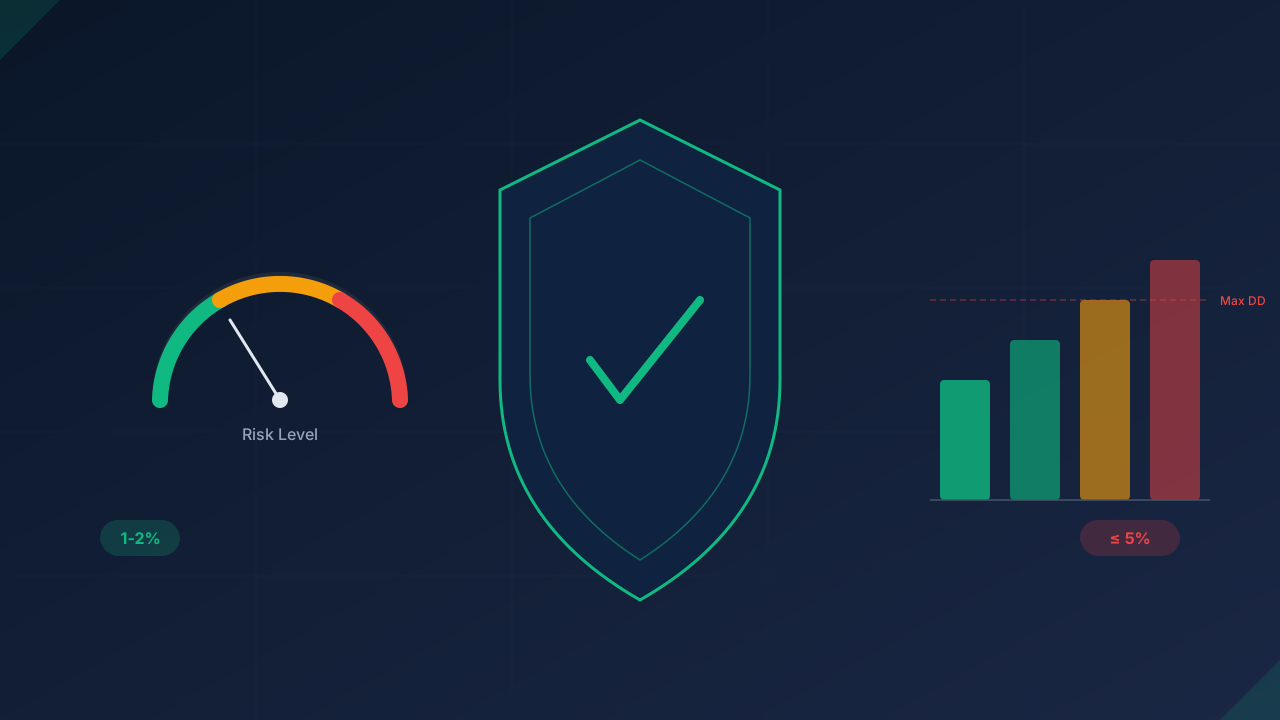
The Fundamental Difference
On a personal account, risk management is about capital preservation — protecting your money so you can continue trading. On a prop account, it's about rule compliance — staying within strict boundaries that, if breached, instantly terminate your access to capital.
- Personal account: You set your own rules. Break them? You face losses but keep trading
- Prop account: The firm sets the rules. Break them? Account closed immediately. No second chance.
"On a personal account, a bad day costs you money. On a prop account, a bad day costs you the account."
Constraint-First Thinking
Personal account traders think: "How much can I make?" Prop traders must think: "How much can I NOT lose?"
Your constraints define your strategy, not the other way around:
- Daily drawdown 5%: Your max daily risk is 5%, but your target should be 2-3%
- Max drawdown 10%: Your total risk budget for the entire challenge is 10%, but plan on using 5-6%
- Profit target 8%: You need to earn 8%, but within the above constraints
This means your risk-to-reward framework is pre-defined by the firm. You just need to operate within it efficiently.
Position Sizing for Prop Accounts
On personal accounts, many traders use 1-2% risk per trade. For prop challenges, you often need to be more conservative:
The Math
- Usable drawdown budget: 50% of max drawdown = 5% on a 10% max DD account
- Consecutive loss tolerance: Want to survive 8 consecutive losses? → 5% ÷ 8 = 0.625% per trade
- Recommended risk: 0.5-0.75% per trade for challenges
Why Lower Risk Works
- Survival first: You can't profit if you're breached. Even 0.5% per trade with a 2:1 R:R can generate 8% in 15-20 trades
- Emotional stability: Smaller losses are easier to accept psychologically
- Room for bad days: Even 3-4 consecutive losses won't put you in danger territory
Risk Budget Allocation
Think of your drawdown limit as a budget you spend across the challenge:
- Week 1-2 (Discovery): Trade at 0.5% risk. Get comfortable with the platform, test your setups, confirm your strategy works in this environment
- Week 2-3 (Execution): If on track, stay at 0.5%. If ahead of target, maintain same risk (don't get aggressive). If behind, stay at 0.5% — don't increase to "catch up"
- Week 3-4 (Closing): If close to target, reduce risk to 0.25% to protect gains. If far from target, assess whether to maintain risk or accept this challenge may need more time
The "Survive First, Profit Later" Mindset
This is counterintuitive for most traders, but in prop trading, not losing is more important than winning. Here's why:
- If you're 6% in profit after 2 weeks, you only need 2% more. Reducing risk makes sense
- If you're 2% in drawdown after 2 weeks, you have plenty of time. Don't panic-trade
- If you're 4% in drawdown... now you need to be very careful. Reduce to minimum risk or stop for a few days
Key Differences from Personal Account Risk Management
- No averaging down: On personal accounts, you might add to losers if you believe in the trade. On prop? Adding to losers can breach your drawdown in minutes
- Hard stop losses always: "Mental stops" are a luxury for personal accounts. On prop, every trade needs a hard stop loss — no exceptions
- No overnight risk (sometimes): Some firms don't allow holding trades overnight or over weekends. This eliminates gap risk but limits swing trading
- News event caution: Many firms restrict trading during high-impact news. Even if they don't, slippage during news can destroy your daily drawdown
- Correlation risk: If you're long EUR/USD and long GBP/USD, a dollar move hits both. On prop, this could mean double the drawdown
After Passing: Funded Account Risk
Once you're funded, risk management changes again:
- Challenge mode: You need to hit a target → balanced risk approach
- Funded mode: No profit target → you can be more conservative since the goal is consistent payouts, not a one-time target
- Drop risk to 0.25-0.5% per trade
- Focus on consistency: small, regular payouts beat one big payout followed by a breach