2-Phase, 1-Phase or Instant Funding — Which Model Suits You?
Not all prop firm challenges are created equal. Here's a breakdown of the three main models and which one fits your trading style.
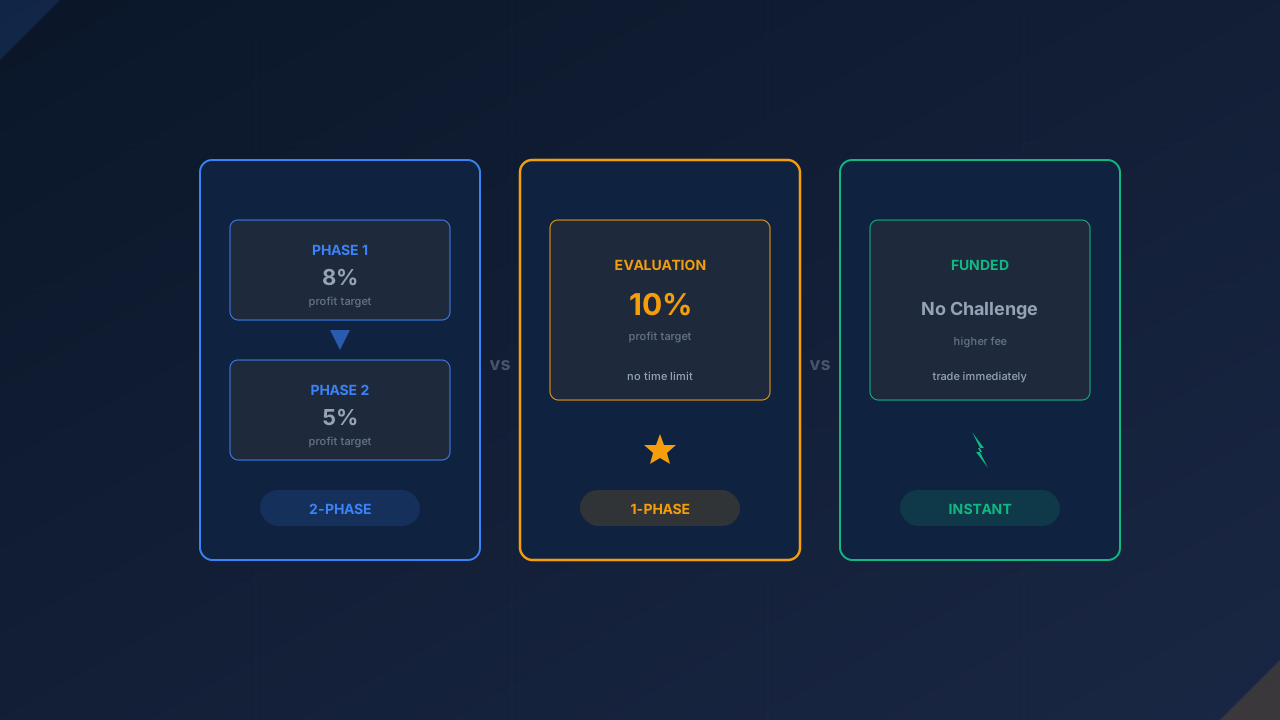
The Three Main Models
Most prop firms offer one or more evaluation models. Understanding the differences is crucial before spending money on a challenge. Here's a summary:
- 2-Phase Challenge: The industry standard — two evaluation stages before funding
- 1-Phase Challenge: A single evaluation — faster but typically stricter
- Instant Funding: No evaluation at all — funded immediately, but with tighter rules and lower profit split
2-Phase Challenge — The Standard
This is the most common evaluation model in the prop trading industry. Firms like Topstep and Earn2Trade have popularized variations of this format.
How it works
- Phase 1: Reach a profit target (typically 8-10%) within 30 calendar days
- Phase 2: Reach a lower target (typically 4-5%) within 60 calendar days
- Funded: You receive the funded account, trade with real rules, and request payouts
Rules (typical)
- Daily drawdown: 5%
- Max drawdown: 10%
- Minimum trading days: 5 per phase
- Profit split: 80-90%
Pros
- Most lenient rules of the three models
- Lower fee per dollar of funded capital
- Two phases mean more time and chances to prove yourself
- Higher profit split once funded
Cons
- Takes longer to get funded (2-4 months minimum)
- Two chances to fail = two gatekeepers
- Can feel like a grind for experienced traders
1-Phase Challenge — Speed & Simplicity
Gaining popularity for traders who prefer a faster path.
How it works
- Single Phase: Reach a profit target (typically 8-10%) within 30-45 days
- Funded: Pass once and you're funded
Rules (typical)
- Daily drawdown: 3-4% (tighter than 2-phase)
- Max drawdown: 6-8% (tighter than 2-phase)
- Minimum trading days: 5
- Profit split: 75-85%
Pros
- Only one hurdle to pass
- Faster time to funded (can be in 1-2 weeks)
- Simpler process — less room for Phase 2 burnout
Cons
- Tighter risk rules make it harder per trade
- Higher fee relative to 2-phase for similar account sizes
- Slightly lower profit split
- Less margin for error
Instant Funding — Skip the Evaluation
For traders who hate evaluations and want immediate access to a funded account.
How it works
- Pay the fee: Higher than challenge fees (often 2-5x)
- Get funded immediately: Start trading and earning from day one
Rules (typical)
- Daily drawdown: 3-5%
- Max drawdown: 5-8%
- Profit split: 50-70% (lower than challenge models)
- First payout: Often after reaching a profit threshold
Pros
- No evaluation stress — start earning immediately
- Good for proven traders who don't want to waste time on challenges
- No risk of "failing" a challenge
Cons
- Significantly higher upfront cost
- Lower profit split means less income per dollar traded
- Rules can still be very strict
- If you breach, you lose a much larger fee
Which Model is Right for You?
- New to prop trading? → Start with a 2-Phase Challenge. The rules are friendlier and the fee is lowest
- Experienced with consistent results? → 1-Phase Challenge gets you funded faster
- Already profitable and hate evaluations? → Instant Funding if you can afford the higher fee
- Tight budget? → 2-Phase Challenge with the smallest account size ($10K-$25K)
"The best model is the one that matches your skill level AND your financial situation. Don't buy instant funding because you're impatient — buy it because you're profitable."